Computational Reflective Imaging
Neither print
nor screen.
A distinct category.
Every image-bearing surface you have encountered either generates light — screens, projectors, LEDs — or absorbs it, as pigment and ink do. Pixel Crystal artworks do neither. They redirect it.
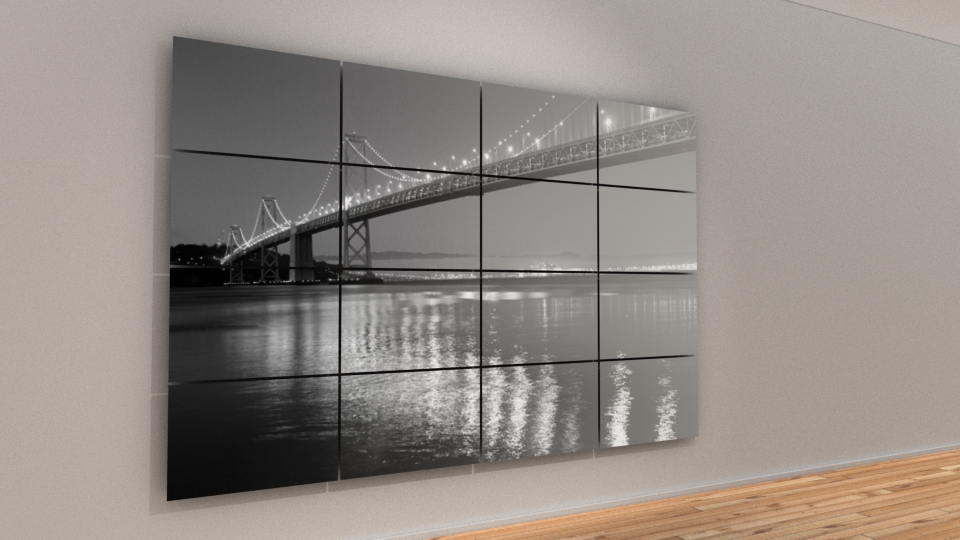
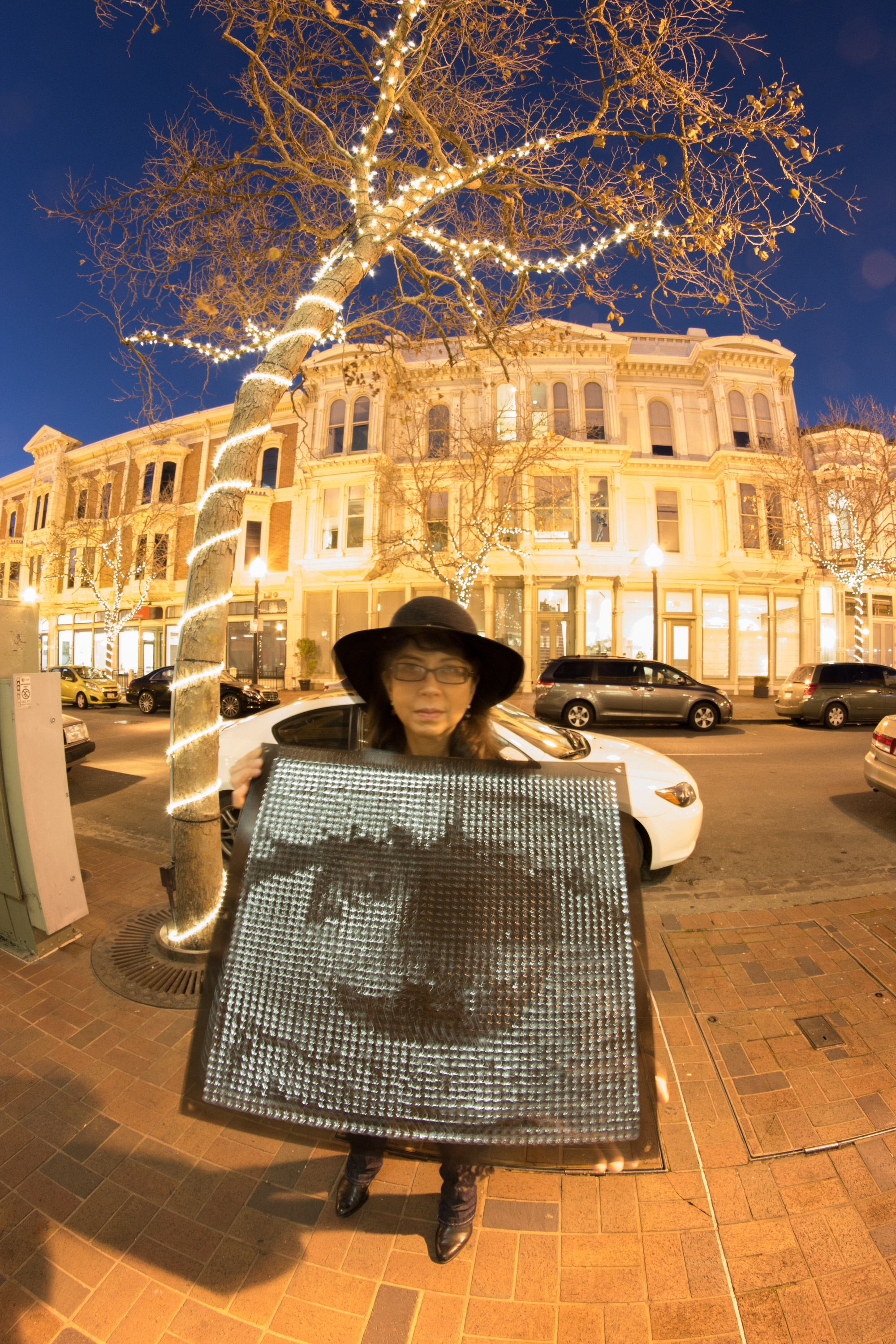
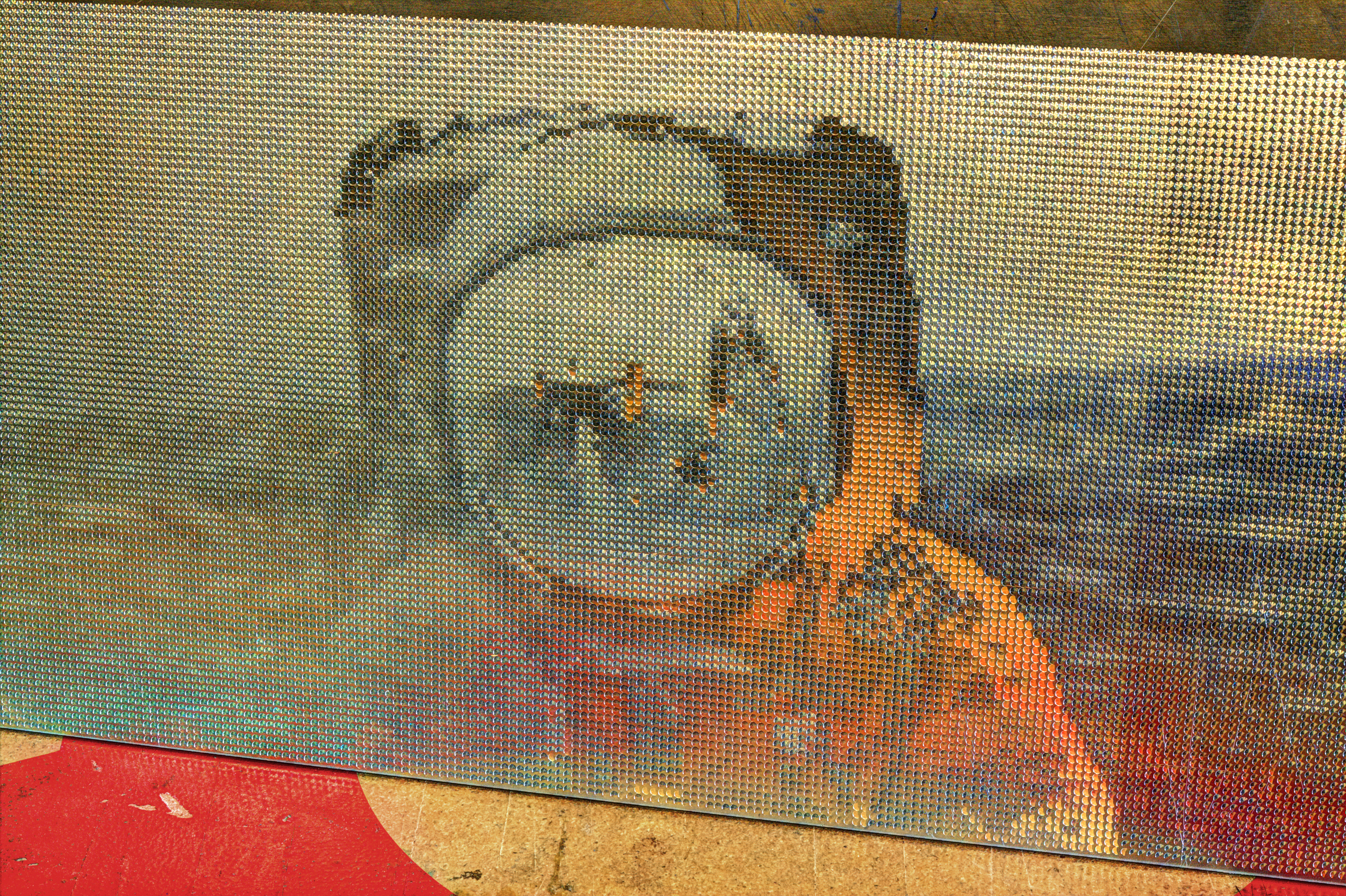
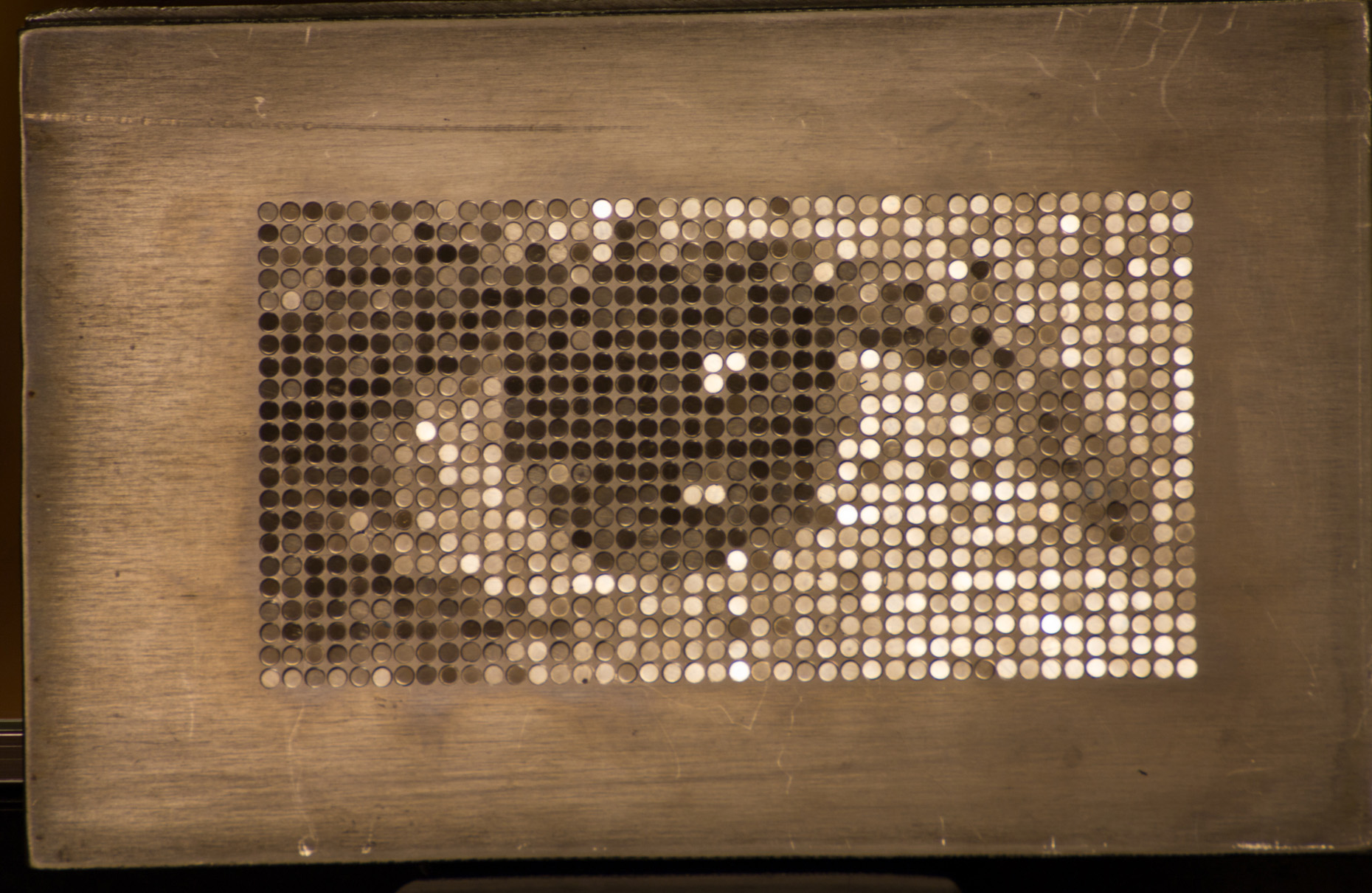
Each edition is paired with a custom-designed color source — positioned behind or above the viewing position and integrated discreetly into the installation — that feeds the surface with a characterized light field. Thousands of mirror pixels, each tilted by computational design, redirect that light toward the viewer to construct an image with a depth and luminance that conventional media do not reach by the same means. The image-bearing surface itself is entirely passive: no onboard electronics or active components of any kind.
Unlike any screen or display, a Pixel Crystal edition carries its computation resolved and complete. The design software solved the problem once — computing the precise tilt of each mirror pixel so that together they redirect a designed light field into the target image. Once the aluminum was machined, the computation became the object. It no longer runs. It requires no power to persist, no calibration to sustain, no software to continue. The image is not being generated. It is being revealed.
The computation ran once. It is now the surface. The image does not depend on electronics to exist — it depends on geometry.
Inaugural Format — Series I
The debut edition is designed for color richness and a single considered behavior: a smooth, luminous shift as the viewer moves — the image transitioning through depth and tone as naturally as light itself changes through the day. Effects that respond to viewer interruption are reserved for future series.